
This is book is part historical fiction, part love story and is also about understanding a shared identity and finding its place amongst opposing beliefs. Shafak writes beautiful prose and tells this relevant story through two voices.
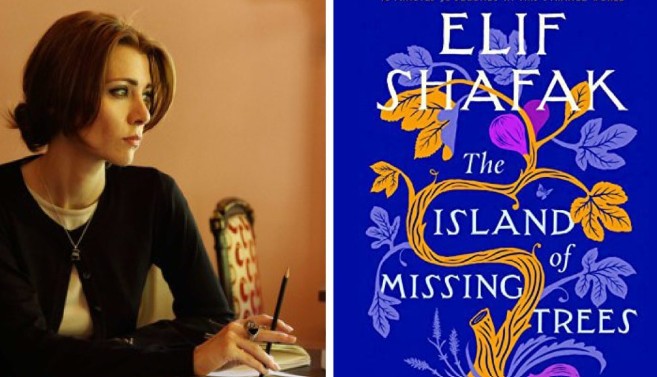
Firstly, there is the fig tree, which tells us of the violent civil history of Cyprus in the twentieth century and the subsequent division between Greek and Turkish communities. The tree also tells us about trees, and the coexistent life around trees. (This is the second book I’ve read this year to do so, the first being the superb ‘The Overstory’ by Richard Powers, (2018) (see my review here). Similarly, ‘Missing Trees’ does a great job of drawing attention to environmental and social issues caused by greed and conflict. The voice of the tree also tells us of the beauty that is possible in a rich and diverse culture. Shafak follows that long tradition of writers, of which Mary Wollstonecraft Shelly was pioneer, which deal with social issues, identity and belonging.
The second voice is that of Ada, a young daughter of an immigrant Greek-Cypriot father and Turkish-Cypriot mother living in London. After her mother’s death, she seeks to understand her father, who becomes distant and buries himself in his passion for gardening, and primarily, his care of a fig tree that was smuggled into the UK from Cyprus.
Through Ada, the novel also deals with more current issues, such as bullying on social media. In doing so, Shafak brings home the relevance of this work of historical fiction.
 Iain Mac Lachlainn
Leave a comment